
How Mintek’s Soils Lab Supports Smarter Geotechnical Decisions
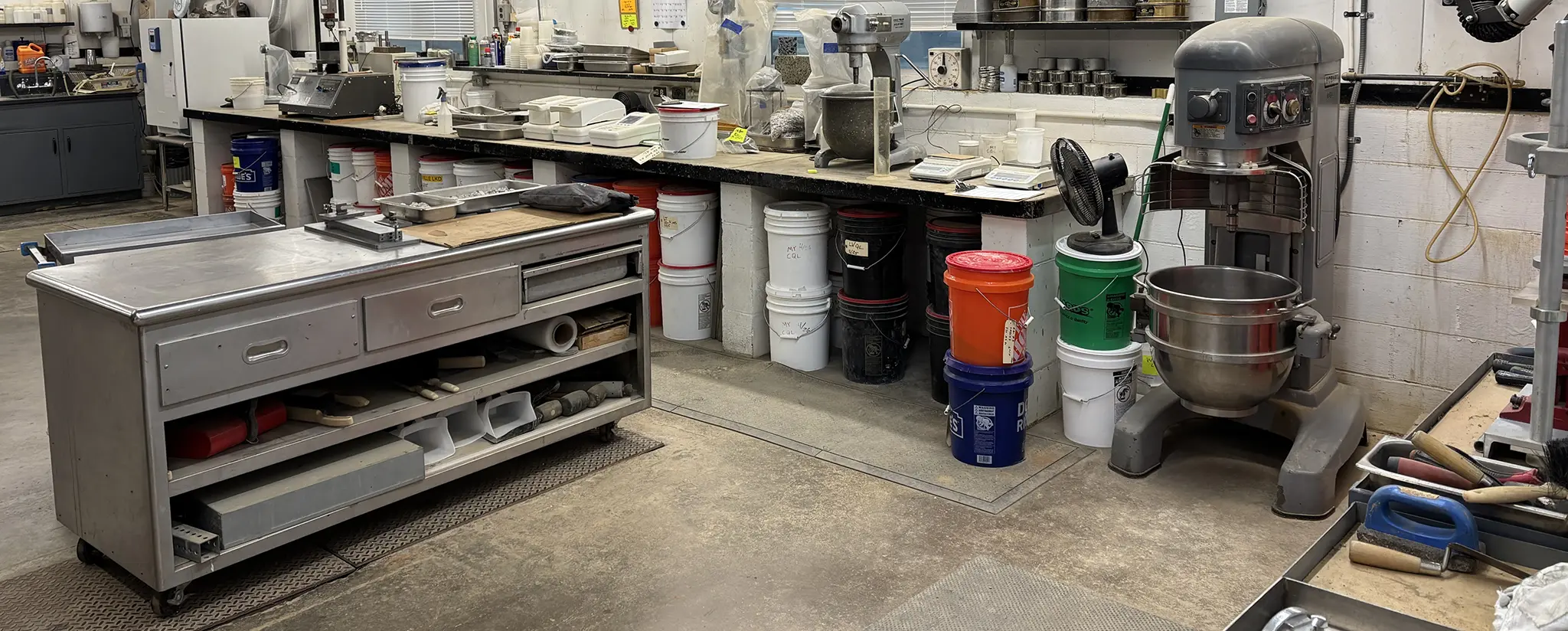
Every successful construction project starts with understanding the ground beneath it. Whether it is a roadway, industrial development, commercial site, or large-scale soil stabilization project, existing soil conditions can significantly affect cost, schedule, constructability, and long-term performance.
That’s why engineers, contractors, and project owners turn to Mintek’s Innovation Center.
The Innovation Center serves as Mintek’s dedicated soils laboratory and technical resource for customers addressing challenging site conditions, geotechnical testing needs, and soil improvement opportunities.
For many customers, the question is not simply, “Will lime work?” It is whether existing soils can be improved and reused rather than removed and replaced. Can the material already on-site support the project requirements? How much improvement can realistically be achieved through lime treatment? The Innovation Center helps customers explore these questions through laboratory testing, technical expertise, and practical field experience.
Get back to work with less downtime.
A Soils Lab Built to Support Real Project Decisions
The Innovation Center is more than a place where soil samples are tested. It helps customers understand their materials and identify practical options for real construction challenges.
Customers often reach out when dealing with highly plastic clays, wet subgrades, low-strength soils, or materials that may not satisfy project requirements. Replacing those materials can lead to additional excavation, imported fill, trucking, schedule delays, increased costs, and logistical challenges.
Before taking that step, customers want to understand whether the material already on site can be improved and reused.
Common questions we help customers address include:
- Can we use the material already on site instead of undercutting and importing new fill?
- How much improvement can realistically be achieved through lime treatment?
- Which treatment options merit further evaluation based on performance, constructability, and project cost considerations?
- Can laboratory testing provide data to help evaluate treated soils against project specifications and performance requirements?
Through geotechnical testing and technical evaluation, the Innovation Center helps project teams compare potential options and make informed decisions before construction begins.
Geotechnical Testing Services at the Innovation Center
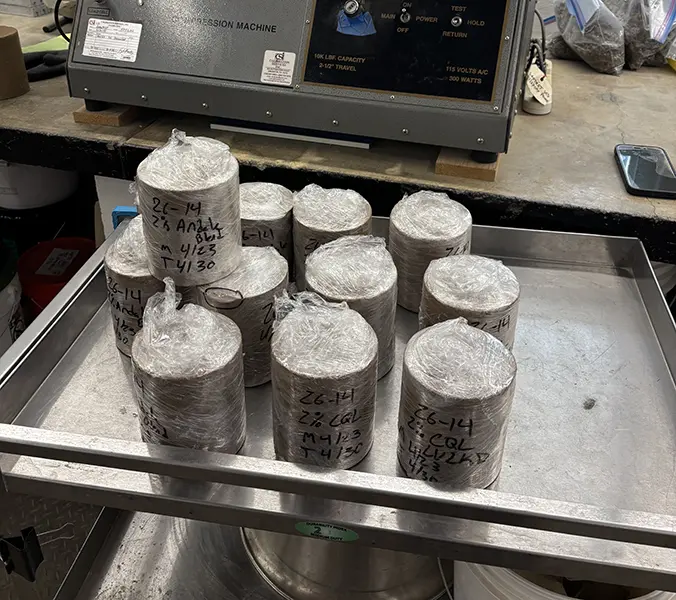
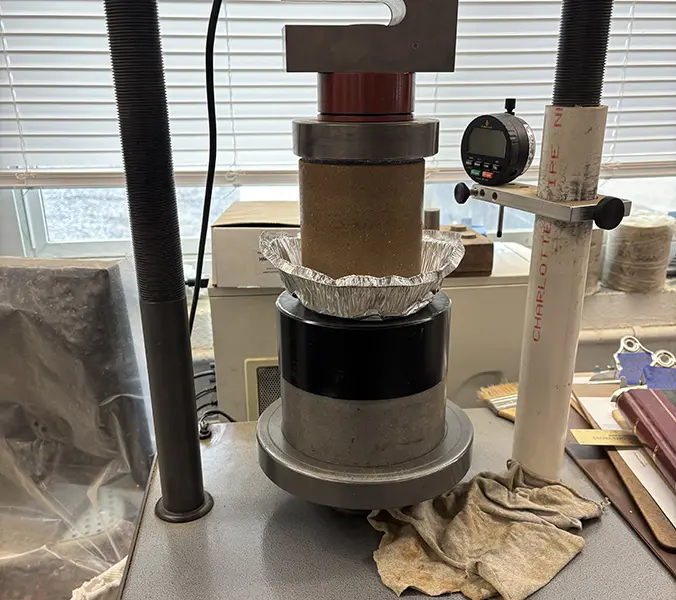
The Innovation Center provides geotechnical testing to characterize soil properties, evaluate treatment responses, and generate data to support engineering and project decisions.
Laboratory Soil Evaluation
- Atterberg Limits and Plasticity Index (PI) evaluation
- Moisture content testing
- Shrink-swell testing
- Lime-treatment evaluations at multiple application rates
- Eades-Grim pH testing
- Unconfined Compressive Strength (UCS) testing
- California Bearing Ratio (CBR) testing
Soil samples may be evaluated at multiple lime treatment rates – often referred to as a lime series – to measure treatment response and identify candidate rates for additional performance testing.
Field Evaluation Methods
- Dynamic Cone Penetrometer (DCP) testing
- Plate load testing
- Falling Weight Deflectometer (FWD) evaluations
When appropriate, field evaluations can complement laboratory testing by helping project teams relate laboratory findings to actual in-place soil conditions and performance. Together, laboratory and field testing can provide a more complete understanding of soil behavior and help inform project decisions.
Atterberg Limits testing identifies key moisture-related consistency limits of fine-grained soils, while the Plasticity Index indicates the range over which the soil behaves plastically. Together, these results help identify highly plastic or moisture-sensitive soils that may be difficult to handle and compact. Shrink-swell testing helps identify materials that may expand or contract as moisture conditions change.
Strength testing, including UCS and CBR, provides data for evaluating whether treated materials can satisfy project-specific engineering requirements. Lime series testing provides comparative data on how a soil responds across multiple treatment levels. Eades-Grim pH testing can help estimate the initial lime demand needed to create the high-pH environment associated with lime-soil reactions. It is generally used as a starting point and should be considered alongside strength, plasticity, and other project-specific performance requirements.
Together, these tests help determine whether existing soils may be suitable for modification, stabilization, and reuse while providing technical findings to support treatment planning and construction decisions.
Helping Customers Reduce Construction Risk
One of the greatest benefits of working with the Innovation Center is reducing uncertainty early in the project lifecycle.
Challenging soils can create significant risks. If unsuitable materials are discovered late in construction, projects may face schedule delays, additional excavation, imported fill costs, increased trucking, redesign discussions, and change orders.
Testing helps identify opportunities and potential challenges before those issues become costly field problems.
Testing results are often used to:
- Evaluate whether existing on-site soils can be improved and reused
- Compare treatment options before finalizing a construction approach
- Reduce project risk and potential change orders
- Support discussions between contractors, engineers, owners, and DOTs
- Move from assumptions to data-driven decisions
A common example involves highly plastic clay soils that are initially considered unsuitable for construction. Through laboratory evaluation, the Innovation Center can measure how a particular soil responds to lime treatment, including potential changes in plasticity, workability, and strength. In some cases, that information can support the use of material already on site rather than excavating and replacing it with imported fill.
From Soil Sample to Solution
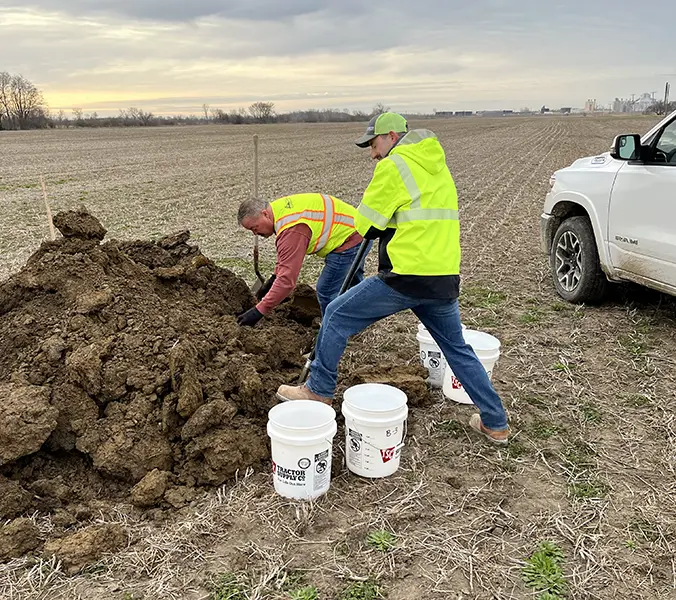
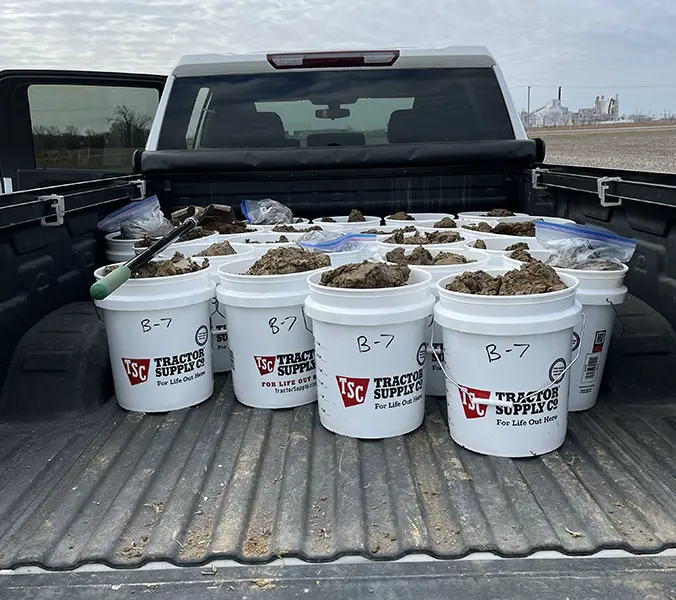
For qualified projects, Mintek provides laboratory testing and technical evaluation to help customers better understand their soils and assess potential treatment options. Customers begin by working with Mintek’s Technical Market Development team, which brings together engineering, geological, soil stabilization, and construction-industry knowledge. The team works directly with customers to understand the project, site conditions, technical requirements, goals, schedule, and construction challenges. Soil samples are then collected and submitted to the Innovation Center, where the laboratory and technical teams use this project context to develop an appropriate testing program.
Customers are typically asked to provide approximately five full 5-gallon buckets of representative soil from across the project site, although the amount may vary depending on the proposed testing program. This generally provides enough material for the laboratory to prepare test specimens, test the soil at multiple treatment levels, and assess treatment response and potential engineering performance under the laboratory conditions tested.
Laboratory results provide technical information to support project evaluation and treatment planning, but actual field performance also depends on factors such as soil variability, moisture conditions, mixing, lime application rate, compaction, curing, weather, and construction practices. Final treatment design, application rates, and acceptance criteria should be established in accordance with project specifications and reviewed by the appropriate project professionals.
A typical project flow looks like this:
- Initial discussion and project review
- Soil sample collection and submission
- Laboratory testing and evaluation
- Interpretation of results
- Treatment guidance and project-specific technical support
Once the samples are received, the laboratory prepares the soil, develops test specimens, performs the appropriate testing, and documents the technical findings. The results are then interpreted in the context of the customer’s objectives and project requirements. Customers typically work with a single point of contact who helps coordinate testing, communication, treatment guidance, and project-specific technical support throughout the evaluation process.
The Innovation Center is positioned to act as an extension of the customer’s technical resources, providing support throughout the evaluation process.
More Than a Soils Lab
Many laboratories can generate test reports. What sets the Innovation Center apart is the combination of specialized lime expertise, geotechnical testing capabilities, and practical field experience. The team understands that laboratory data must ultimately be applied in real-world construction conditions.
As part of the broader Carmeuse technical network, the Innovation Center combines geotechnical expertise with capabilities in chemistry, microscopy, pilot-scale testing, and product development, allowing customers to benefit from a wide range of technical resources.
The center also serves as a resource for contractors, engineers, DOTs, and industry partners seeking guidance related to soil-lime interactions, stabilization strategies, material performance, and field application.
Supporting Projects Across the Region
The Innovation Center has supported projects ranging from local developments to major infrastructure and stabilization efforts. One example is a large-scale stabilization project in eastern Tennessee, where laboratory testing and technical evaluation provided project-specific information to support lime treatment planning for challenging soils across the site. The project demonstrates how understanding soil conditions and treatment responses early can help project teams move into construction with better information and a clearer treatment approach.
Wilson Whorton
While every project is different, the need for reliable geotechnical data remains the same.
Whether the challenge involves high plasticity, poor strength, moisture-sensitive soils, shrink-swell concerns, or questions about engineered fill, the Innovation Center helps customers understand the material and identify potential solutions.
A Partner in Project Success
More than a soils lab, the Innovation Center combines geotechnical testing, specialized lime expertise, and practical construction experience to help customers understand their materials, evaluate potential treatment approaches, and make better-informed project decisions.
Have a project involving wet, highly plastic, low-strength, or otherwise challenging soils? Contact Mintek to discuss the site conditions and determine whether laboratory evaluation may help identify a practical path forward.
We're here to help you find the best solution for your next project. Let's get started. Give me a call at 937-641-9901.

Krystan Minor
Mintek Resources
Related Posts
Our Story: More Than Three Decades of Innovation and Growth
For more than three decades, we have helped customers solve complex challenges across the construction, oil and gas, environmental, waste treatment, industrial, and biosolid markets. As our capabilities, team, and footprint have grown, our focus has remained the same:...
What Is a Mellow Period?
Rethinking Lime Stabilization Timing with Modern Practice In soil stabilization and modification work, the term “mellow period” is frequently referenced and often misunderstood. It is regularly treated as a rigid, time-based requirement rather than a construction...
How to Write Effective Soil Treatment Language in Geotechnical Reports
Clear soil treatment language is critical to turning geotechnical recommendations into successful construction outcomes. Even well-prepared geotechnical reports can end up with soil treatment language that is misinterpreted or not implemented as originally intended....