
How to Write Effective Soil Treatment Language in Geotechnical Reports
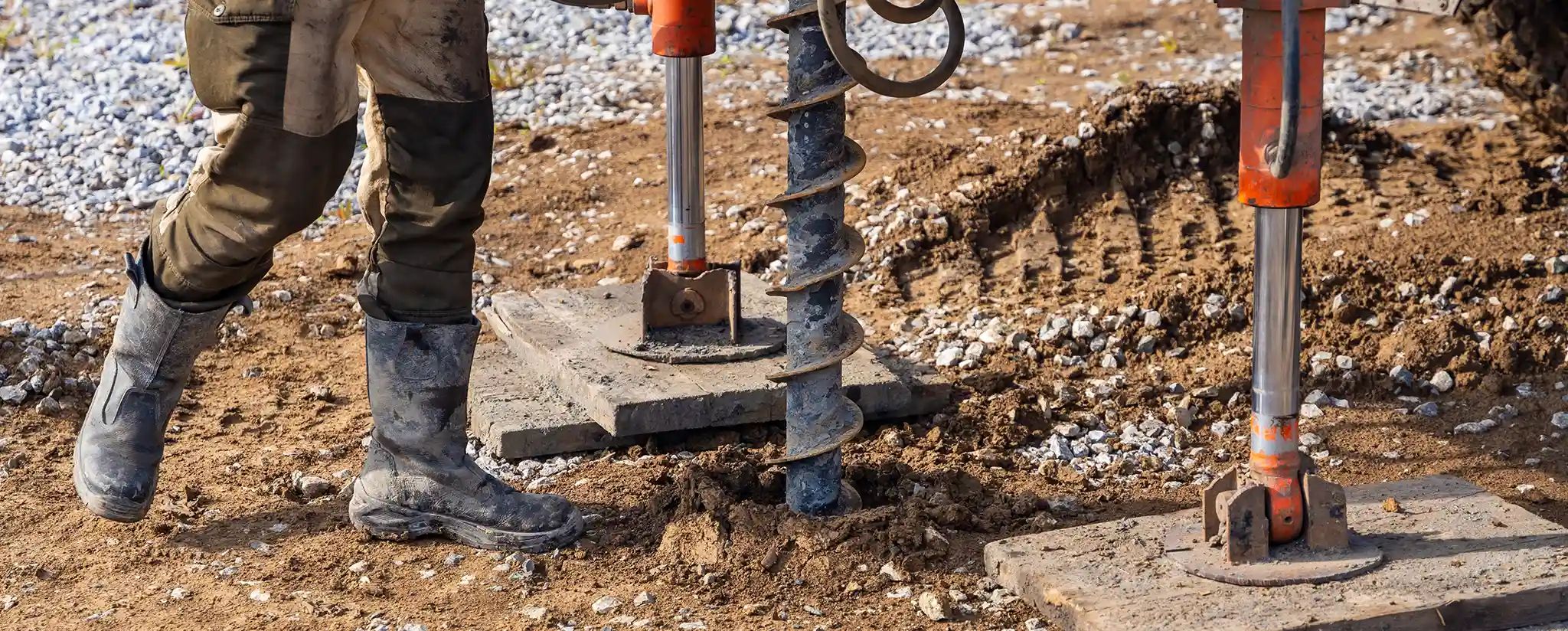
Clear soil treatment language is critical to turning geotechnical recommendations into successful construction outcomes. Even well-prepared geotechnical reports can end up with soil treatment language that is misinterpreted or not implemented as originally intended.
With a few practical approaches, engineers can write soil treatment recommendations that are:
- Technically sound
- Easy for contractors to interpret
- Directly usable for DOT, commercial, and site development projects
By focusing on clarity, intent, and constructability, geotechnical engineers can better support decision-making across design and construction phases.
Get back to work with less downtime.
The Importance of Earthwork Sections: Performance Criteria over Construction Means and Methods
Earthwork sections form a critical link between subsurface exploration and construction performance. To be effective, they must balance uncertainty, engineering judgment, and risk while clearly communicating expectations to the project team.
Well-written earthwork language helps define contractor responsibilities during soil treatment and establishes assumed support conditions for foundations and pavements. Rather than focusing on how the contractor achieves these conditions, the report should describe what constitutes acceptable performance – such as compaction, plasticity, and strength targets – at the completion of treatment.
Performance-based language clarifies intent while allowing contractors to select appropriate techniques that meet project requirements and specifications.
Understanding Design Intent: Distinguishing Between Soil Drying, Modification, and Stabilization
Clear, performance-based earthwork language starts with distinguishing soil drying, soil modification, and soil stabilization, which are sometimes used interchangeably but serve different purposes. Confusion can lead to misaligned expectations in design, bidding, and construction.
- Soil Drying: Reduce Moisture to Enable Compaction
Soil drying is intended to reduce excess moisture so soils can be worked and compacted effectively. Lime-based reagents, such as quicklime or lime kiln dust (LKD), are the best drying option because they chemically react with water – consuming moisture and generating heat through an exothermic hydration reaction. The result is improved short-term handling and constructability. Soil drying does not target long-term strength gains and is not intended to provide structural support. - Soil Modification: Improve Plasticity and Short-Term Constructability
Soil modification goes a step further by improving engineering properties such as plasticity, workability, and shrink–swell behavior. Lime can often drastically improve Atterberg limits and plasticity index, allowing construction to proceed within hours. While modification improves compaction characteristics, strength increase is generally marginal and should not be relied upon for load-bearing performance. Specifying the use of a proof roll can help indicate if enough improvement has occurred to allow construction operations to continue. - Soil Stabilization: Develop Long-Term Strength for Structural Support
Soil stabilization requires an engineered mix design with defined performance criteria and results in long-term improvements to strength, bearing capacity, and durability. These improvements are achieved through chemical reactions between the lime and the soil minerals that form cementitious bonds, increasing stiffness and load‑bearing capacity over time. When properly implemented, stabilization can allow more efficient design of overlying pavement or foundation systems.
Clearly defining the intended outcome and writing recommendations accordingly is essential to ensuring earthwork is designed, specified, and constructed as planned.
Why the Distinction Matters: Performance Targets and Mix Design Requirements
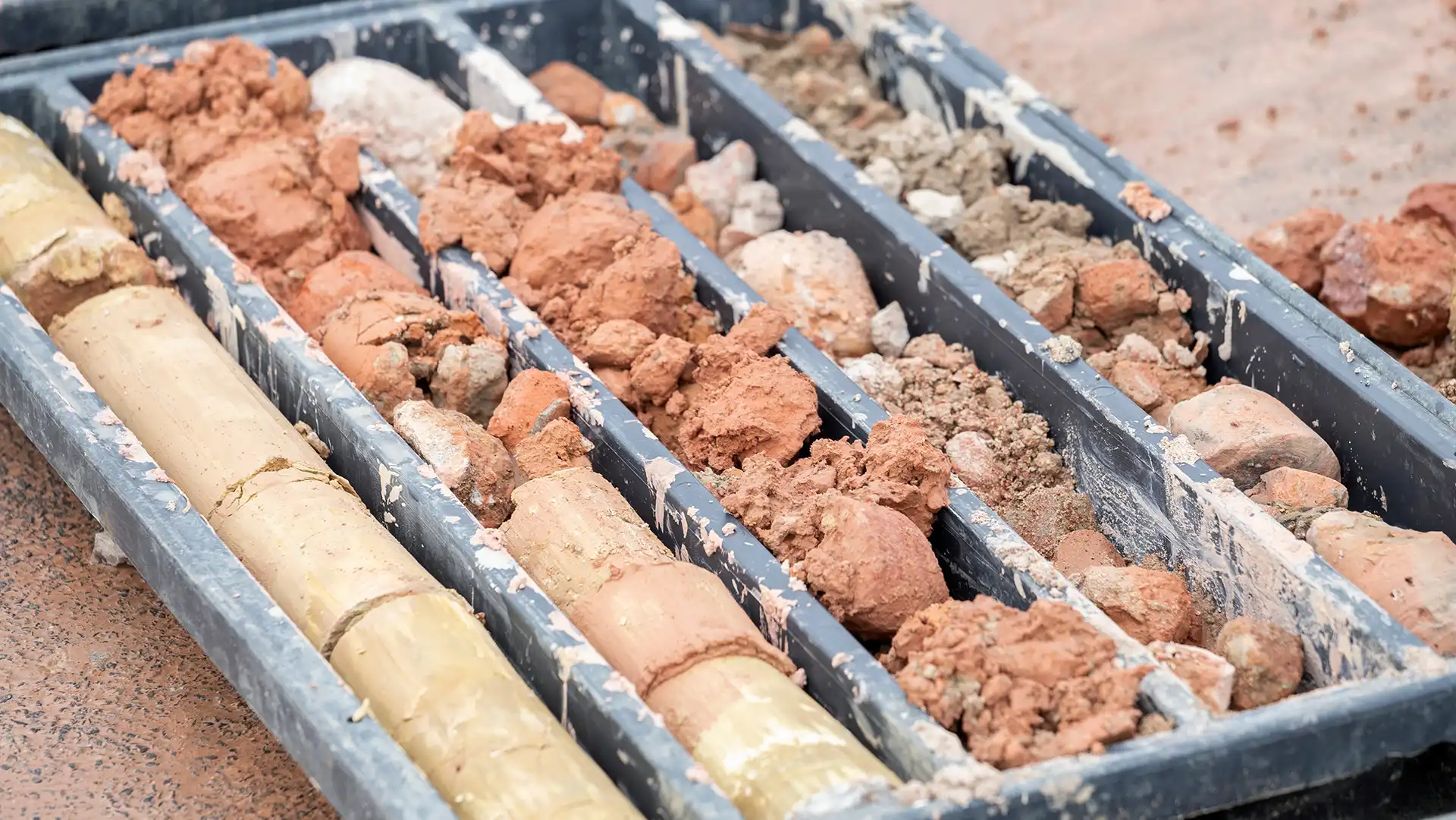
Clearly defining the intent of soil treatment – drying, modification, or stabilization – directly governs performance targets, testing protocols, and acceptance criteria. When unclear, testing programs can miss the mark, contractor expectations may diverge from engineering intent, and acceptance decisions become subjective and prone to dispute.
Different soil treatment objectives require different performance measures:
Soil stabilization
Soil stabilization, intended to improve strength and long-term support, should be evaluated using strength-based criteria such as ASTM D5102 for unconfined compressive strength (UCS) or ASTM D1883 for California Bearing Ratio (CBR). Historically, ASTM D6276, commonly known as the Eades-Grim test, has been used to estimate the minimum lime content needed to initiate and sustain pozzolanic reactions for stabilization. However, many are turning to a “lime series” (UCS and/or CBR at multiple dose rates) to determine at what point the strength design criteria is met. When used together, they can help ensure the adequate pH environment is achieved as well as the strength criteria. Without these data, it is difficult to demonstrate that true stabilization—rather than short-term modification—has been achieved.
Soil Modification
Soil modification is typically focused on improving constructability rather than structural capacity. For these applications, performance targets should emphasize changes in index properties, such as reductions in Plasticity Index (PI) measured in accordance with ASTM D4318 or improvements in shrink–swell behavior which can also be measured with ASTM D1883 for CBR. These criteria more accurately reflect the engineering intent and provide a clearer, more defensible basis for acceptance than strength testing alone.
Soil Drying
Soil drying, while often less formally defined, still benefits from intentional laboratory evaluation. Although specific strength or index testing may not be required, lime-treated Proctor testing should always be performed to establish treated-soil compaction characteristics and moisture requirements. Both ASTM D698 Standard Proctor and ASTM D1557 Modified Proctor tests are applicable to lime treated soils. This ensures that field targets are appropriate and that drying efforts translate into predictable, verifiable construction outcomes.
Explicitly linking soil treatment intent to mix design testing requirements aligns contractor expectations with design assumptions, supports appropriate mix design development, and establishes an objective framework for verification and acceptance. Performance-based language, paired with clearly defined testing criteria, reduces ambiguity, minimizes disputes, and increases confidence that soil treatment will deliver its intended engineering .
To support this process, the contractor should be required to submit a soil treatment mix design for review and approval prior to the start of field work. Because laboratory testing of chemically treated soils requires adequate curing time and iterative evaluation, mix design development should be completed during preconstruction rather than concurrent with earthwork. Requiring an approved mix design in advance helps avoid schedule impacts, field rework, and disputes related to unmet performance criteria.
Construction Controls
Once performance criteria are defined, appropriate construction controls should be established to ensure those criteria are achieved. The role of the geotechnical report is to define boundaries, expectations, and verification requirements, while leaving execution details to the contractor.
Construction controls should begin by clearly defining the limits of soil treatment. The soil types requiring treatment and their anticipated location should be explicitly identified so all parties understand where soil treatment is required and where it is not. Clear limits help prevent scope creep, inconsistent application, and disputes during construction.
The report should also define expectations for mellowing, where applicable, based on soil properties and the type of lime treatment being used. The mellow period should be considered a construction tool rather than a fixed, time-based requirement. Larger quicklime products with coarser particle sizes (e.g., pebble lime) may require 4-24 hours to fully hydrate and react with the soil, while more finely graded products with narrower particle-size distributions – such as LKD or Construction Quicklime (CQL) – typically require little to no mellowing (often on the order of a few hours or less) due to increased surface area and more uniform mixing, especially with proper equipment like today’s modern spreader trucks and soil reclaimers. By avoiding prescriptive mellow periods and instead referencing observable cues such as soil breakdown and uniformity following mixing, the report establishes objective expectations while preserving contractor flexibility in sequencing and execution.
Finally, construction controls should clarify weather limitations, including minimum temperatures and precipitation restrictions under which soil treatment may proceed. While chemical stabilization is often not recommended when soil temperatures fall below 40 ºF (5 ºC), cold weather liming practices can keep projects on track when construction must proceed at unfavorable times. This guidance helps protect the integrity of the treatment process without constraining how contractors manage operations.
From Intent to Implementation
Clear, effective soil treatment language bridges the gap between geotechnical recommendations and successful construction outcomes. By defining treatment intent, emphasizing performance-based criteria, and aligning mix design testing and construction controls with that intent, geotechnical reports can reduce ambiguity, manage risk, and support constructable solutions.
Thoughtful soil treatment language – focused on expectations rather than means and methods – helps ensure that drying, modification, and stabilization efforts are properly designed, tested, and executed.
Ultimately, clarity in reporting improves coordination among designers, contractors, and owners, and increases confidence that soil treatment will deliver its intended engineering performance.
Industry Expertise and Product-Specific Guidance
For projects involving lime-based soil treatment, Mintek Resources can provide project-specific guidance on product selection, mix design considerations, and performance expectations for drying, modification, and stabilization applications.
Leveraging supplier expertise early – particularly during mix design development – helps align material behavior with engineering intent and supports more predictable field performance.
We're here to help you find the best solution for your next project. Let's get started. Give me a call at 937-641-9901.

Krystan Minor
Mintek Resources
Related Posts
Our Story: More Than Three Decades of Innovation and Growth
For more than three decades, we have helped customers solve complex challenges across the construction, oil and gas, environmental, waste treatment, industrial, and biosolid markets. As our capabilities, team, and footprint have grown, our focus has remained the same:...
How Mintek’s Soils Lab Supports Smarter Geotechnical Decisions
Every successful construction project starts with understanding the ground beneath it. Whether it is a roadway, industrial development, commercial site, or large-scale soil stabilization project, existing soil conditions can significantly affect cost, schedule,...
What Is a Mellow Period?
Rethinking Lime Stabilization Timing with Modern Practice In soil stabilization and modification work, the term “mellow period” is frequently referenced and often misunderstood. It is regularly treated as a rigid, time-based requirement rather than a construction...