
5 Keys to Successful Soil Stabilization
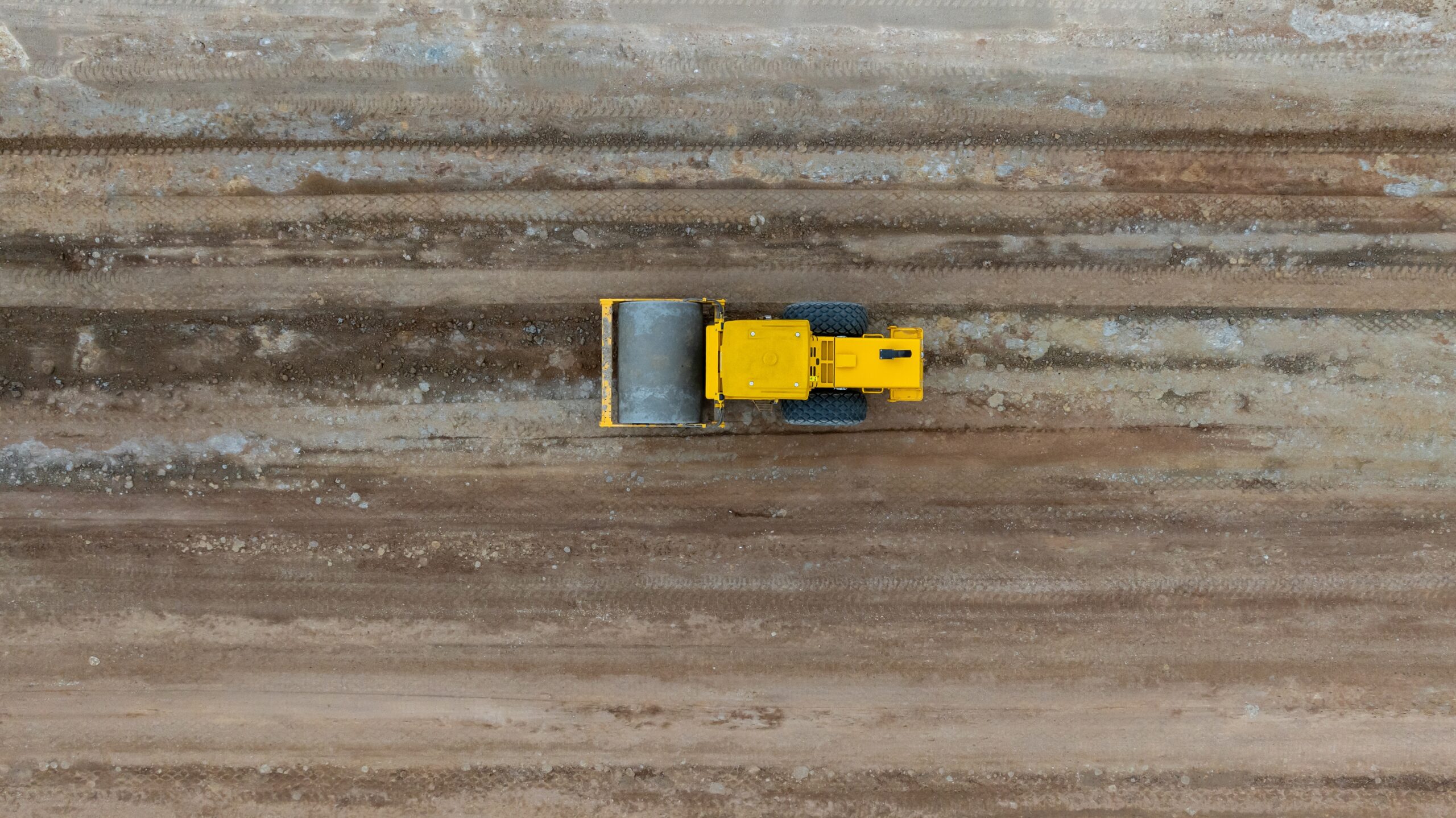
Creating a solid foundation for construction projects depends on proper soil stabilization. While every job site presents unique challenges, successful stabilization is consistently achieved when teams follow proven best practices backed by testing, planning, and technical guidance. When executed correctly, lime‑based treatments deliver long‑term performance and significant cost savings, which is why they remain one of the industry’s most trusted solutions.
This guide outlines the key elements of successful stabilization, helping contractors, engineers, and owners get reliable, repeatable performance across a wide range of soil conditions.
Get back to work with less downtime.
What is Soil Stabilization?
Soil stabilization is the process of improving the engineering properties of soil to create a stronger, more durable foundation for subsequent construction operations. This technique transforms weak or unsuitable soils into a stable foundation capable of supporting buildings, roadways, and other infrastructure. Whether dealing with expansive clays, wet soils, or materials with poor bearing capacity, soil stabilization provides an economical alternative to excavation and replacement.
Why Proper Soil Stabilization Matters
When soil stabilization is properly designed and executed, chemical treatments such as lime consistently deliver long-lasting performance and measurable cost savings. Performance issues are almost always tied to missed construction fundamentals rather than the stabilizing material itself. A properly executed project delivers a strong working platform, extends service life, and minimizes maintenance costs for years to come.
key #1
Start with Thorough Soil Testing
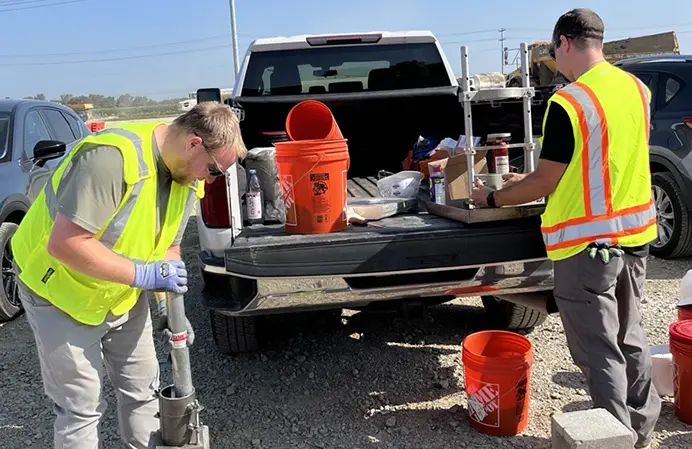
Inadequate testing before a project starts is one of the biggest mistakes in soil stabilization. Comprehensive testing provides the clarity needed to select the right stabilization approach and avoid unexpected field variability. Without proper soil analysis, contractors and engineers lack the information needed to select appropriate stabilization materials or determine correct application rates.
Soil Properties You Should Test Before Starting
Successful project outcomes depend on understanding key soil characteristics. Soil testing begins with determining moisture content and classifying the soil based on plasticity index and gradation. These properties directly influence which stabilization technique will perform best and at what dosage rate. For chemical stabilization, an important step is performing an Eades & Grim test or a lime series (testing unconfined compressive strength at different dosage rates) to determine the optimal treatment rate. These tests help confirm the ideal treatment rate and support the strong performance lime is known for.
Knowing the Right Targets for the Field
A common and potentially costly mistake in soil stabilization projects is relying on Proctor curves developed for untreated soils. Chemical treatment fundamentally alters soil behavior – typically increasing optimum moisture content (OMC) while reducing maximum dry density (MDD).
It’s critical to recognize that a lower unit weight does not indicate inferior soil performance. In fact, chemical stabilization often significantly improves strength, durability, and overall behavior, even when MDD drops by several pounds per cubic foot.
Field performance can be misinterpreted when untreated‑soil density targets are applied to stabilized materials. This can lead to compaction expectations that don’t reflect stabilized soil behavior, creating extra effort and confusion.
To avoid these issues, all parties must work from Proctor curves developed on treated soil samples, not native material. Aligning expectations before construction begins is essential to achieving proper compaction and long‑term performance.
Why Accurate Soil Assessment Is Key to Cost-Effective Stabilization
Thorough site assessment helps teams identify the most efficient and cost‑effective stabilization strategy. Accurate soil data helps ensure the selected stabilization method is the most effective and efficient for the conditions. For example, clay‑heavy soils respond exceptionally well to lime, while lower‑plasticity or granular soils may be better suited for cement or mechanical stabilization. When the wrong approach is selected due to limited soil data, crews may end up over‑treating, reworking large areas, or relying on costlier materials and extended construction timelines. In short, inadequate testing doesn’t just create technical challenges – it often drives up project costs and reduces overall efficiency by forcing contractors to correct mismatches between soil conditions and treatment methods.
Best Practices for Geotechnical Analysis
Quality assurance starts with a thorough upfront geotechnical review:
- Sample multiple locations across the project site, as soil conditions can vary significantly within small areas
- Document moisture content at the time of sampling
- Note any variation in soil type or plasticity
This comprehensive testing provides the data needed for proper stabilization planning.
keY #2
Match the Stabilization Method to the Soil
Not all stabilization techniques work equally well across different soil conditions. Evaluating multiple stabilization options helps ensure the chosen method offers the best performance and value. Understanding when to use cement versus lime, or when mechanical methods might suffice, is crucial for project success. Before automatically choosing remove-and-replace methods, consider chemical treatment options that can provide significant cost and time savings while reducing environmental impact.
Cement vs. Lime Stabilization: When to Use Each
Lime excels at treating plastic, clay-rich soils with a plasticity index above 10. It rapidly modifies clay soils to improve workability and bearing capacity and to reduce shrink-swell potential – all while delivering long-term strength and durability through ongoing pozzolanic reactions that continue for months or even years. Lime’s inherent drying capability makes it especially effective on wet or challenging sites. As with all engineered stabilization methods, lime performs best when standard practices such as proper moisture control and thorough mixing are followed. Proper moisture control may even mean adding water to allow for complete hydration of the lime in the soil.
Cement works well for granular materials and soils with lower plasticity. It provides faster initial strength gain compared to lime but lacks the same drying capacity and may struggle with proper mixing in overly wet conditions. The key is matching the stabilizing materials to specific soil conditions rather than using the same approach for every project.
Chemical Stabilization Options and Their Applications
Beyond traditional lime and cement, kiln dust like Calciment® LKD bridges the gap between the two. This lime-pozzolan blend combines calcium oxide with natural pozzolans, making it effective for medium plasticity soils. It offers an economic option with reliable performance across a range of soil types.
Chemical stabilization has been shown to provide substantial cost savings compared to remove-and-replace operations, often delivering 20–40% reductions in overall project costs. For projects of any significant size, testing soil samples to determine the optimal chemical treatment approach should be standard practice. Small, localized areas may warrant traditional excavation, but larger treatment zones can benefit greatly from the efficiency and performance of chemical stabilization.
Mechanical Stabilization Techniques for Different Soil Types
Mechanical methods work through densification and aggregate blending rather than chemical reactions. These techniques suit projects where chemical treatment isn’t necessary or where soil conditions don’t respond well to chemical stabilization. However, mechanical stabilization alone may not address issues like shrink-swell or provide the long-term strength improvements that chemical methods deliver.
keY #3
Use the Right Dosage and Mixing Techniques
Even with the right stabilization method selected, maintaining consistent quality control during material application is essential for achieving the best results. Variations in mixing practices or dosage rates can introduce inconsistencies that reduce overall efficiency and performance. By paying close attention to these standard construction practices, contractors can ensure the stabilization process delivers the intended strength, uniformity, and long‑term value.
Understanding Bearing Capacity Requirements for Your Project
Different projects demand different performance standards. A residential driveway requires less bearing capacity than a highway or airport runway. Clearly defining project requirements upfront guides material selection and application rates. Underdosing stabilizing materials to reduce costs often creates problems, resulting in failed compaction tests and potential remediation.
Quality Control Standards for Stabilization Materials
Proper material application requires accurate dosage calculations and verification. For lime stabilization, rates typically range from 3-7% of dry soil weight, while lime kiln dust may require 5-10%. Cement typically requires 4-10% or more – though cement is not recommended for high plasticity clay soils, where significantly higher rates would be needed to overcome soil reactivity issues. These percentages depend on soil type, desired outcomes, and mixture design results. Field verification through proper spreading rates confirms that the applied dosage matches the mix design requirements.
Achieving Thorough, Full-Depth Mixing with the Right Equipment
Consistent, thorough mixing plays an important role in helping stabilization treatments perform at their best. Proper blending ensures lime is well‑distributed throughout the soil layer, supporting uniform strength development while also minimizing material loss or environmental exposure. Using appropriate equipment – such as high‑horsepower reclaimers capable of full‑depth pulverization – helps achieve this even distribution efficiently and helps to ensure proper hydration. Thorough, uniform mixing ensures that each portion of the treatment area receives the full benefit of stabilization. By focusing on effective mixing from the start, contractors can promote better performance and smoother project execution.
keY #4
Support the Process with Proper Equipment & Moisture Control
Through thoughtful planning and coordination, the construction phase offers a valuable opportunity to help the lime stabilization process perform at its best. With the right approach, elements such as equipment selection, moisture management, and compaction timing can all work together to support strong, consistent results. Environmental factors like temperature and precipitation naturally influence the process, and when they’re anticipated and managed proactively, they become another part of a well‑executed project rather than a source of disruption.
Essential Construction Equipment for Soil Stabilization
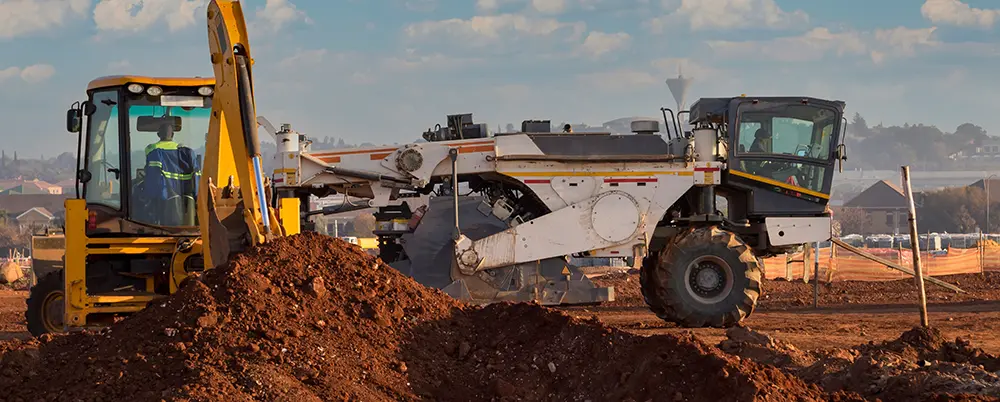
Successful soil stabilization projects are supported by the use of dependable, well‑matched equipment. Spreader trucks help ensure stabilizing materials are placed uniformly across the treatment area, minimizing dust and setting the stage for consistent results. High‑horsepower reclaimers or rotary mixers then pulverize the soil, thoroughly blend and help to properly hydrate the stabilizers, creating the deep, even incorporation needed for reliable performance. While disc harrows are useful for surface work, full‑depth reclaimers are the best fit for achieving uniform chemical incorporation. Using specialized reclaimers or mixers helps ensure complete integration of materials, supporting uniform strength development and long‑term project success.
Water trucks play an important role as well, providing the moisture control necessary for treatments – especially lime and cement – to hydrate properly and develop strength. Proper hydration during mixing is one of the most important contributors to effective lime stabilization. Lime needs adequate moisture to fully react with soil particles, and when that moisture is present, the material develops strength, improves workability, and supports uniform compaction. Ensuring adequate moisture supports complete reactions and helps create consistent performance across the treatment area. It’s not the lime that causes these challenges, but simply incomplete mixing or a lack of available moisture.
By pairing the right equipment with thorough blending and proper hydration, contractors can achieve uniform incorporation, reliable strength development, and long‑term performance across the entire treatment area.
Compaction Standards and Monitoring Procedures
Timing plays an important role in helping soil stabilization treatments perform at their best. For lime applications, a mellowing period—typically ranging from less than four hours to about 24 hours—gives the initial reactions time to develop before final compaction. Some high‑PI soils (PI > 35) benefit from a 24 hour mellow to allow lime to fully modify the soil. Compaction is most effective when completed within the project’s specified window ensuring the material remains workable and well‑conditioned. Coordinating these steps helps crews maintain ideal moisture levels, reduce unnecessary reworking, and keep the project moving efficiently.
Managing Environmental Factors During Construction
Environmental conditions such as temperature, precipitation, and wind naturally influence stabilization work, and understanding these factors helps teams optimize performance. While chemical reactions slow in colder weather, lime can remain effective when proper cold‑weather practices are used, allowing work to continue with confidence. Likewise, being aware of expected rainfall or higher temperatures supports better planning around moisture management. With thoughtful scheduling and routine monitoring, crews can adapt to changing conditions and maintain steady progress.
During mellowing and before final compaction, shifts in moisture from rain or heat may require adjustments – such as adding lime for drying or using water trucks or tack coats to maintain ideal moisture levels. These are standard field practices and anticipating them helps keep the process efficient. By planning construction activities around forecast conditions and having simple contingencies in place, teams can ensure consistent results and avoid unnecessary delays.
keY #5
Verify Performance and Support Long-Term Strength Development
Soil stabilization continues to develop strength even after construction activities move forward, which makes thoughtful monitoring and curing practices an important part of achieving long‑term performance. Proper curing, protection during early strength development, and timely checks help ensure the treated layer performs as intended. In addition to proof rolling, projects can use in‑place density checks, moisture verification, or UCS testing to confirm that buried or early lifts are meeting expectations. Allowing adequate time before placing additional lifts or introducing traffic helps the stabilized soil reach its designed strength. A quick field check, such as a proof roll, can confirm the layer is ready for the next lift while long‑term strength continues to develop.
Developing Effective Maintenance Strategies
A well‑stabilized soil layer benefits from appropriate curing time before bearing loads. For lime‑treated subgrades, this typically includes 5–7 days of protected curing for the final lift, depending on project specifications and environmental conditions. Maintaining surface moisture and limiting disturbance during this period supports continued pozzolanic reactions and helps the layer develop uniform strength. In many cases, a proof roll – rather than a fixed timeframe – serves as the practical indicator of whether the material is ready to support construction traffic.
Performance Monitoring Systems for Stabilized Soils
Proof rolling after the curing period provides a straightforward way to confirm that the stabilized layer is performing as expected. Lime can often modify the soil in a matter of hours to minutes. A loaded truck traveling across the treated area should do so without noticeable deflection or rutting, indicating that the soil has achieved the intended level of support. Field verification helps confirm performance and identify opportunities for fine‑tuning when appropriate.
When Adjustment, or Rework, May Be Required
Even with strong planning and thorough testing, some areas of a project may benefit from additional attention. When variations occur, determining the most efficient corrective step keeps the project moving smoothly. Localized soft spots often need only minor retreatment, while broader inconsistencies may call for another stabilization pass or targeted adjustments. Fortunately, comprehensive pre‑project testing and proper mix‑design work significantly reduce the likelihood of widespread rework and help ensure the stabilization process performs consistently across the site.
Building Success Through Proper Planning
Successful soil stabilization comes from a combination of experience, thoughtful planning, and clear communication throughout the project. Early coordination between contractors, engineers, and material suppliers ensures everyone shares an understanding of project requirements, site conditions, and realistic timelines. This collaborative approach streamlines execution and supports predictable, high‑quality results.
Evaluating chemical treatment options – such as lime, cement, or kiln dust – early in the design phase allows teams to identify opportunities for improved performance, lower costs, and reduced construction time. Testing representative soils helps determine whether chemical stabilization is the most efficient solution and guides decisions on materials, treatment rates, and sequence of work.
Strong alignment from the beginning helps create schedules that reflect mellowing periods, curing needs, equipment availability, and weather considerations. When all stakeholders plan together, the stabilization process becomes more predictable, more efficient, and better positioned to deliver long‑term performance.
About Mintek Resources
Mintek Resources brings over three decades of experience helping contractors and engineers achieve reliable soil stabilization results. Our technical team provides comprehensive support from initial soil testing through final construction, ensuring you select the right products and apply them correctly for your specific soil conditions. With a distribution network spanning 29+ states and more than 20 DOT approvals, we offer the technical expertise and logistical support needed to keep your project on track and on budget. Contact us to discuss your next soil stabilization project and discover how proper planning and execution create the solid foundation every successful project demands.
We're here to help you find the best solution for your next project. Let's get started. Give me a call at 937-641-9901.

Krystan Minor
Mintek Resources
Related Posts
Building Big Starts Below Ground: Soil Strategies for Mega Projects
Mega construction projects come with unique soil challenges that can derail schedules and inflate budgets if not addressed early. Managing soil variability across hundreds of acres while achieving the bearing capacity required for massive structures demands a...
Cold Weather Liming for Construction Sites: Everything That You Need to Know
Winter construction doesn't have to mean costly shutdowns. Cold weather liming for construction sites leverages the exothermic reaction of lime-based products to dry, modify, and stabilize soils even in freezing conditions. This comprehensive guide covers the science...
Tariffs Disrupt Construction: Lime Keeps Projects Moving
Tariffs are reshaping the construction landscape. From cement and steel to aluminum and other essential materials, shifting trade policies are creating ripple effects across the industry. Even when prices hold steady, the uncertainty around future costs and sourcing...