
Tariffs Disrupt Construction: Lime Keeps Projects Moving

Tariffs are reshaping the construction landscape. From cement and steel to aluminum and other essential materials, shifting trade policies are creating ripple effects across the industry. Even when prices hold steady, the uncertainty around future costs and sourcing adds pressure to project budgets and planning.
For contractors managing complex builds, that unpredictability can complicate everything from estimating to procurement. Materials once considered routine now carry risk, making it harder to forecast costs and maintain financial control.
Get back to work with less downtime.
Supply Chain Disruptions Beyond Pricing
Tariffs can introduce friction at multiple points in the supply chain. Beyond raising costs, they often lead to customs delays, re-routing of shipments, and sudden changes in sourcing strategies. These disruptions can slow down material availability, complicate logistics planning, and challenge contractors working on tight schedules. In an industry where timing and coordination are critical, even small shifts in trade policy can ripple across job sites.
A Stable Solution for Soil Stabilization
In today’s unpredictable construction environment, contractors are looking for ways to reduce exposure to supply chain volatility. Lime remains a dependable choice for soil stabilization, especially in difficult conditions like wet or reactive subgrades. It dries and modifies soil in a single application, helping crews stay productive and maintain progress.
With consistent pricing and broad domestic availability, lime-based reagents offer a level of stability that imported materials often cannot match. When conditions demand a reliable solution, lime delivers performance without the uncertainty.
Why Lime Is a Safe Bet for Today’s Construction Projects
Faster Construction Timelines
Mintek developed Construction Quicklime (CQL) specifically to meet the fast-paced demands of the construction industry. Its high reactivity and fine particle size allow it to quickly interact with soil moisture, delivering working platform strength in just hours.
CQL supports efficient mixing and rapid drying, helping crews stabilize soils and move into compaction without delay. With a mellow period of four hours or less and no need for a second mix, it streamlines field operations and keeps equipment moving.
Compatible with a wide range of spreaders and pneumatic systems, CQL also improves transfer rates and reduces detention time, making it a practical choice for projects where time and reliability matter.
Consistent Supply and Quality
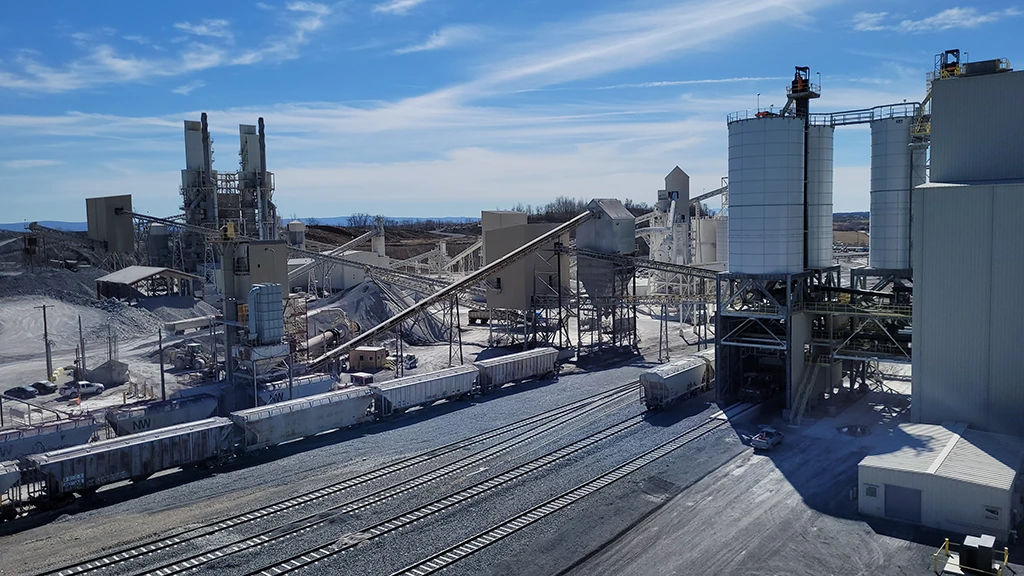
In a construction market shaped by global volatility, domestic sourcing offers a critical advantage. The U.S. lime industry is well-established, with 73 active lime plants operating across 28 states and Puerto Rico. This broad footprint helps insulate projects from customs delays, tariff fluctuations, and international bottlenecks, ensuring more predictable delivery schedules and pricing.
Consistency goes beyond availability. Lime products manufactured in long-standing U.S. facilities follow strict quality control standards and align with American construction specifications. Whether you are using quicklime, hydrated lime, or lime kiln dust, you get reliable performance backed by documentation that meets domestic regulatory requirements.
Together, dependable supply and consistent quality make lime a stable choice in an otherwise volatile construction landscape.
Addressing Common Misconceptions About Lime
Long-Term Soil Strength: Lime Compared to Cement
Lime is often viewed primarily as a drying agent, but its role in long-term soil stabilization is far more robust, especially in clay-rich subgrades. Its chemical interaction with clay minerals reduces shrink-swell behavior and improves soil workability, creating a more stable foundation. While cement stabilization delivers higher initial compressive strength, lime-treated soils gain strength gradually through pozzolanic reactions that continue well beyond the initial curing period. This steady development contributes to durable, resilient subgrades that hold up under real-world conditions.
Lime-treated soils also perform well under environmental stress. Their ability to accommodate thermal expansion and contraction helps reduce cracking during freeze-thaw cycles and seasonal shifts. In contrast, cement-treated soils can become brittle, increasing the risk of surface cracking and long-term degradation. Field and lab data consistently show lime-treated soils achieving comparable bearing capacities to cement-treated soils. But it’s the sustained strength and environmental resilience that make lime a reliable choice for long-term performance.
Getting Comfortable with Lime
Lime stabilization is widely recognized in DOT specifications, with proven performance across a range of soil conditions. Despite this recognition, many contractors still associate lime primarily with drying, overlooking its value as a long-term stabilization solution.
For contractors who have spent years working with cement, lime can feel unfamiliar at first. That’s why Mintek focuses on education and support. We regularly host lunch and learn sessions, offer on-site training, and share real-world project insights to help teams understand how lime performs across different soil conditions.
From on-site consultation to application guidance, our team works directly with contractors and engineers to ensure successful outcomes. Whether it’s reviewing lab data, adjusting spread rates, or troubleshooting field conditions, we are here to help every step of the way. With Mintek, you get more than reliable materials – you get a partner committed to your success.
FAQs
Will cement be affected by tariffs?
Yes, cement imports face tariffs ranging from 10% to 25% for most countries, with some facing rates up to 46%, depending on the country of origin and current trade policies.
Which stabilizer is better for my project - lime or cement?
Both lime and cement are proven soil stabilizers, but they work best in different conditions:
- Lime is ideal for clay-rich soils. It dries wet subgrades quickly and reduces plasticity, making the soil more workable. Over time, lime-treated soils gain strength through pozzolanic reactions, forming a durable matrix that resists environmental stress.
- Cement works well in granular soils like silt and sand. It binds particles together rapidly, offering high initial strength and durability. Cement stabilization is often preferred when fast strength gain is critical.
The choice between lime and cement depends on soil type, project timelines, and performance goals. In some cases, a combination of both may deliver the best results.
How much does lime cost compared to cement?
Costs vary by region, soil conditions, and application rates. Lime is often more economical for stabilizing clay-heavy soils, especially when drying is needed. Cement may be more cost-effective in granular soils where rapid strength gain is the priority. For tailored recommendations and quotes, contact us today.
We're here to help you find the best solution for your next project. Let's get started. Give me a call at 937-641-9901.

Krystan Minor
Mintek Resources
Related Posts
How Mintek’s Soils Lab Supports Smarter Geotechnical Decisions
Every successful construction project starts with understanding the ground beneath it. Whether it is a roadway, industrial development, commercial site, or large-scale soil stabilization project, existing soil conditions can significantly affect cost, schedule,...
What Is a Mellow Period?
Rethinking Lime Stabilization Timing with Modern Practice In soil stabilization and modification work, the term “mellow period” is frequently referenced and often misunderstood. It is regularly treated as a rigid, time-based requirement rather than a construction...
How to Write Effective Soil Treatment Language in Geotechnical Reports
Clear soil treatment language is critical to turning geotechnical recommendations into successful construction outcomes. Even well-prepared geotechnical reports can end up with soil treatment language that is misinterpreted or not implemented as originally intended....