
Projects
Des Moines International Airport Expansion

Market
Application
Dose Rate
Project Overview
- 5% quicklime fines used to stabilize challenging subgrade soils.
- More than 1,100 tons treated approximately 15k cubic yards in place.
- Delivered a stable foundation meeting FAA performance requirements.
- In coordination with our valued partner JB Holland Construction, Inc.
Background
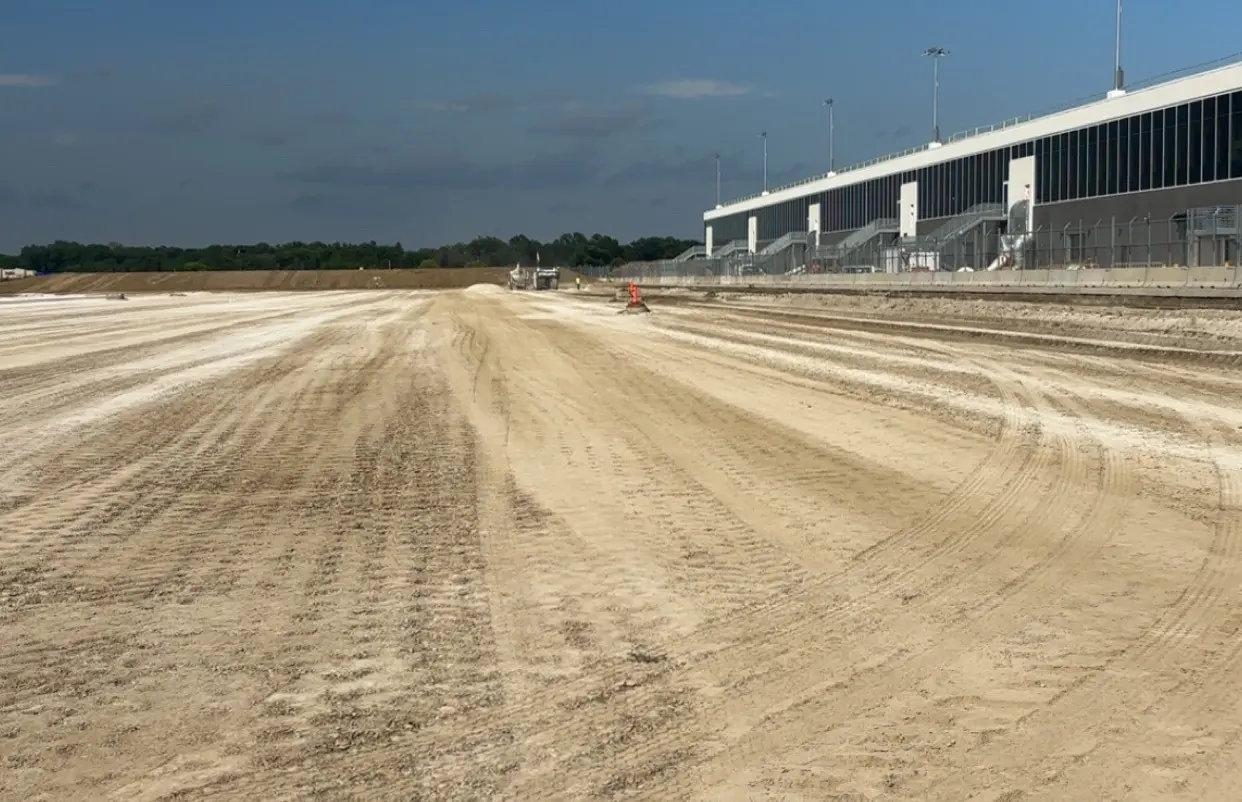
Des Moines International Airport is undergoing a major terminal expansion, beginning with the construction of Apron 1A directly in front of the new facility. As an early phase of development, this scope required preparing a stable, uniform subgrade capable of meeting FAA performance requirements for long-term pavement support.
The Challenge
The project involved high-plasticity subgrade soils, which created challenges around moisture control, stability, and achieving compaction. For an airfield application, these conditions can significantly impact both constructability and long-term pavement performance if not properly addressed.
The team needed to meet FAA P-155 specifications and achieve 95% compaction (modified proctor) while maintaining consistent production across the apron.
The design approach focused on the more efficient and cost-effective solution, improving the existing soils, rather than removing and replacing them.
The Solution
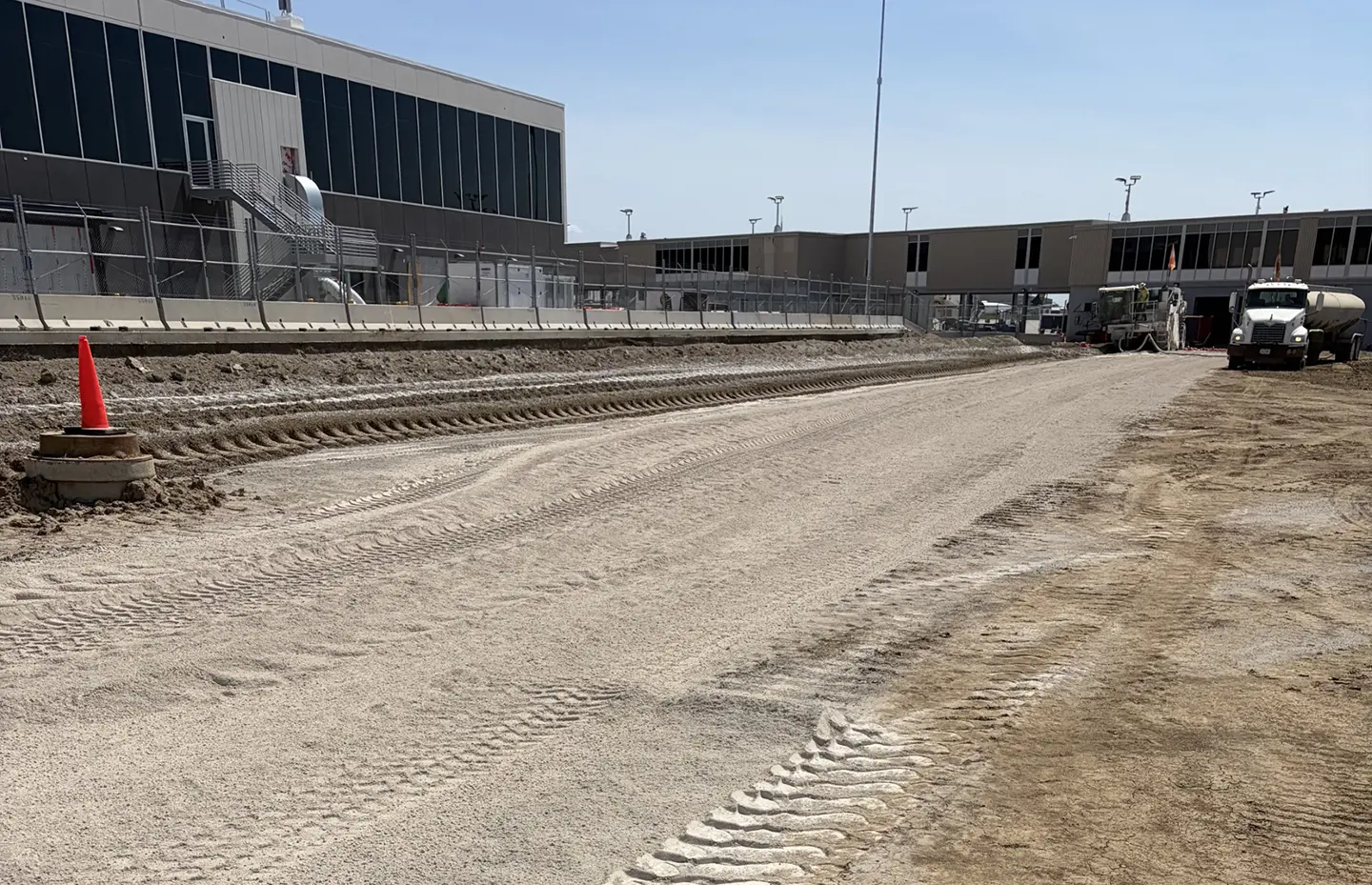
Quicklime fines were applied at a 5% rate to stabilize the subgrade soils. More than 1,100 tons treated approximately 15,000 cubic yards in place, avoiding an estimated 750 truck trips to remove unsuitable soils and another 750 to import fill. Beyond the clear cost savings, this approach also reduced site traffic, improving safety and minimizing community impact.
While previous airport projects had utilized recycled concrete and additional aggregate sections, this phase presented an opportunity to improve the existing soils through in-place stabilization. Lime treatment reduced soil plasticity, improved workability, and created a more stable subgrade layer, allowing the contractor to efficiently process the material in place and achieve compaction targets under demanding specifications.
Implementation
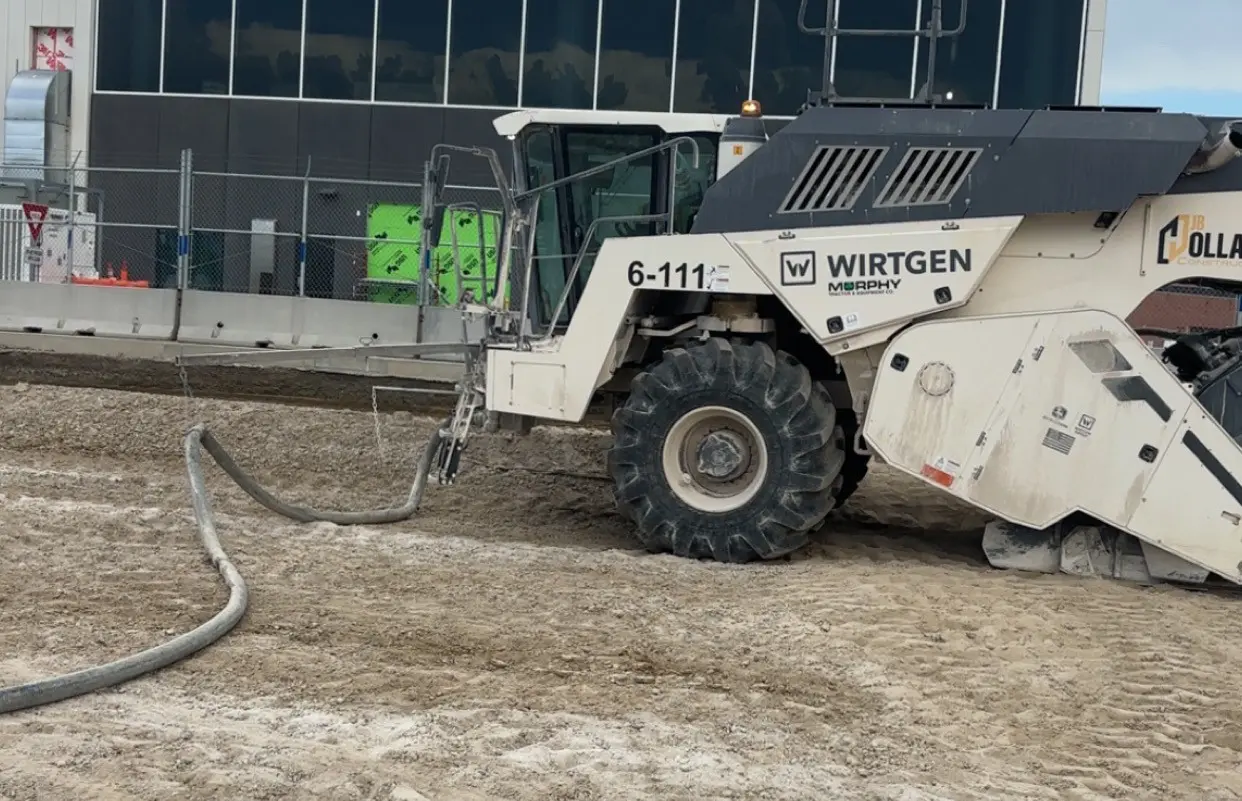
The material was delivered pneumatically and applied using a Stoltz spreader, followed by mixing with a Wirtgen WR 250 reclaimer. The stabilization process included:
- Spreading quicklime across the subgrade
- Initial mixing and light compaction
- Additional water was incorporated during mixing as needed to achieve specified moisture targets despite dry soils and hot construction conditions.
- A 48-hour mellowing period was used on this project to allow additional reduction in soil plasticity before final mixing and compaction
- A second mix, followed by final grading and compaction
All work was completed in accordance with FAA P-155 specifications, with the two-step mix process helping improve consistency and compaction results across the treated area.
To support production, on-site material handling included two spreaders and a storage pig, which allowed the crew to maintain steady operations and keep material readily available during the stabilization process.
Results
Lime stabilization produced a strong, uniform subgrade that met FAA requirements and final design criteria for the new terminal apron. The treated soils achieved the specified 95% compaction and provided a stable foundation for long-term pavement performance.
From a construction standpoint, stabilizing the soils in place improved workability and allowed the crew to more efficiently process and compact the subgrade. By reducing plasticity and strengthening the existing material, the project minimized the need for imported aggregate while still delivering a high-quality subgrade suitable for demanding airfield conditions.
Garrett Grabau
Des Moines International Airport Expansion