
Projects
O’Hare International Airport Expansion

Market
Application
Dose Rate
Project Overview
- 2% CQL used to dry and modify wet stockpiled soils.
- Mixed to 16 in. depth across large volumes for consistent workability.
- Achieved up to 5% moisture reduction enabling steady compaction and placement.
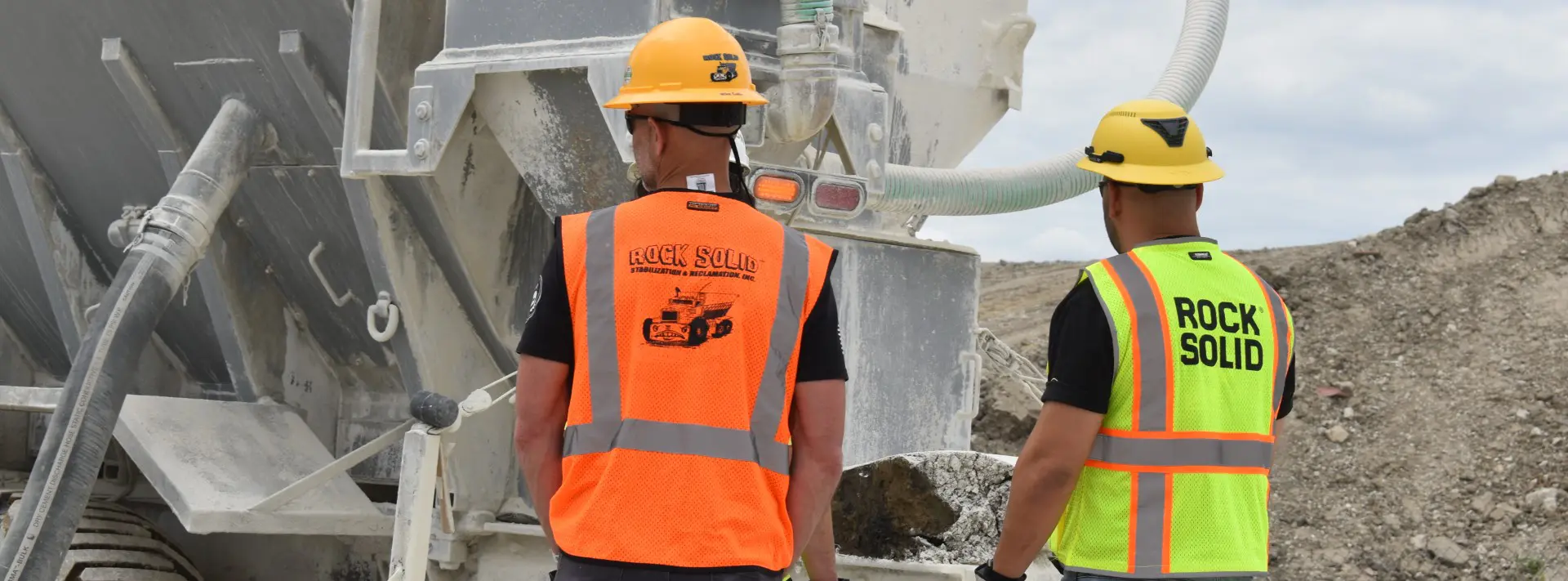
- In coordination with our valued partner Rock Solid Stabilization & Reclamation.
Background
O’Hare International Airport in Chicago, Illinois is in the midst of a long-term modernization program aimed at expanding terminal capacity and improving airfield efficiency. As part of this effort, multiple runway and taxiway realignments were required, resulting in the permanent removal of several existing runways to accommodate new taxiway corridors and future terminal development.
This phase of work focused on eliminating a centrally located detention basin that sat within the footprint of the planned expansion. Large volumes of soil generated during earlier construction phases had been stockpiled on-site and were designated for reuse as fill material. Reprocessing these soils was critical to maintaining project momentum and reducing off-site disposal and import costs, all while working within the tight scheduling constraints of an active international airport.
The Challenge
The primary challenge on-site was managing large volumes of soil stockpiled during earlier phases of construction. The material was above optimum moisture content and unsuitable for immediate placement or compaction. With runway and taxiway work tied to an active airport schedule, there was limited flexibility to pause operations and wait for natural drying.
In addition to moisture concerns, the project required that any reused material meet strict engineering and airport performance requirements. Consistency and predictability were critical, as the soils were intended for placement within the former detention basin to support future taxiway and terminal expansion. Because this work occurred within the footprint of an active airport averaging more than 2,300 flights per day, maintaining strict dust control was also a top priority to ensure safe airfield operations and visibility.
The Solution
CQL (construction quicklime) was selected as the most effective option for conditioning wet soils and reducing moisture content to workable levels within the project schedule. A lime mix design was developed prior to construction to establish the appropriate application rate and verify performance expectations. Based on this design, CQL was specified at a 2% application rate, mixed to a depth of 16 inches, equating to approximately 29.8 pounds per square yard.
This approach allowed soils that were already on-site to be processed for reuse rather than relying on natural drying or removal and replacement. By addressing excess moisture chemically, the project team was able to improve soil workability and maintain progress despite schedule constraints and active airfield operations. Coordinated planning between material supply, mix design, and field application allowed the work to proceed without disruption.
Implementation
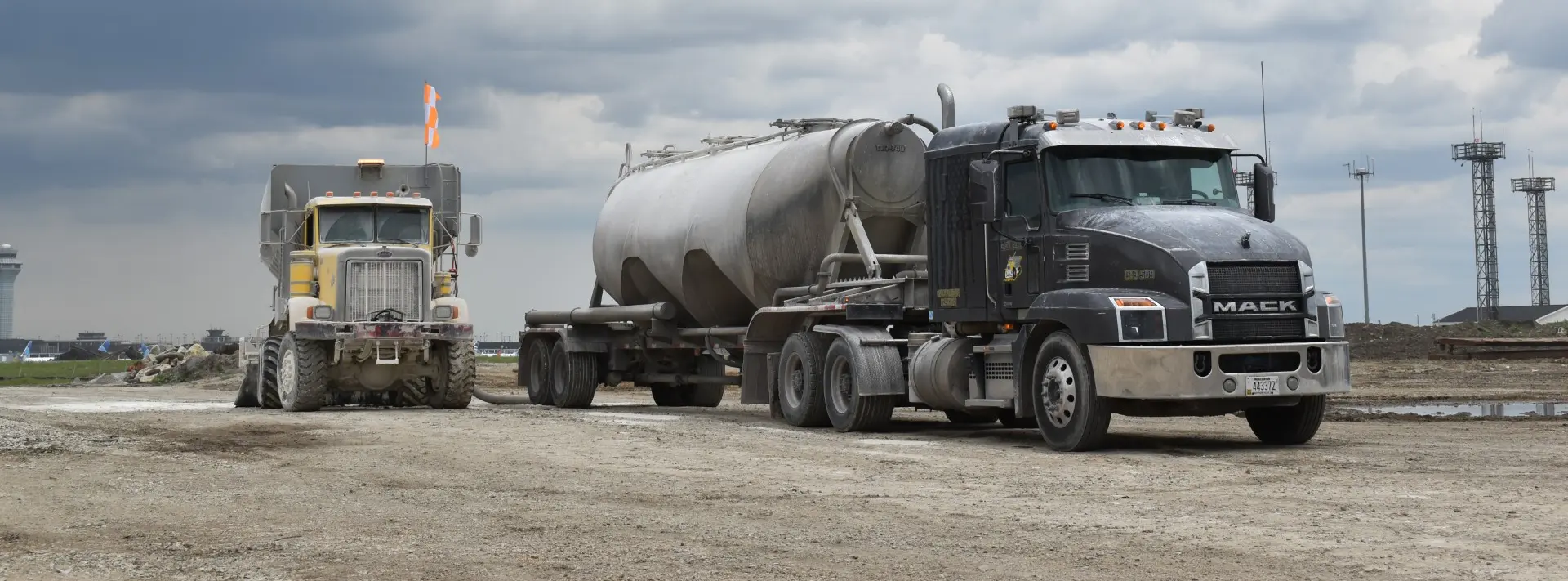
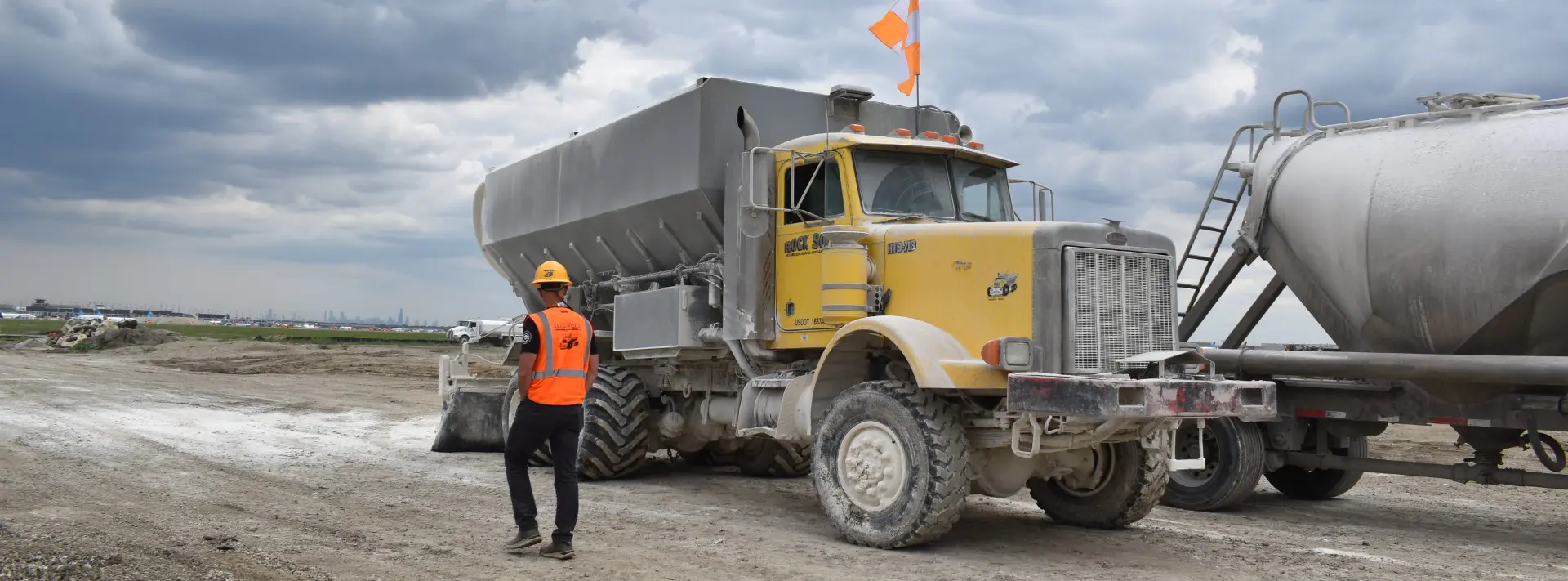
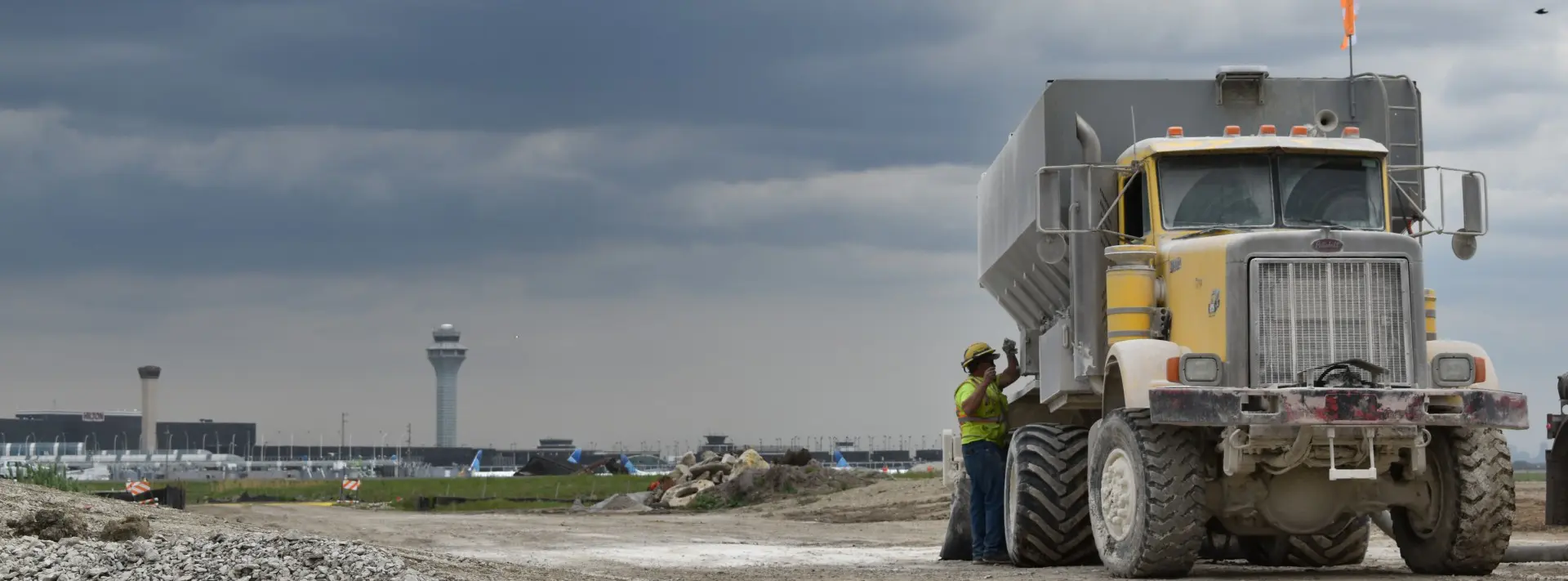
Rock Solid Stabilization & Reclamation applied more than 4,500 tons of CQL directly to soil stockpiles generated during earlier construction phases. The material was spread across the soil surface using a computerized site spreader to achieve uniform distribution at the specified rate. A light application of water was used to initiate hydration before the lime was blended into the soil to a consistent depth of 16 inches using a reclaimer. To support continuous airfield activity, Rock Solid utilized low-dust spreader bars and controlled construction methods that allowed lime to be spread and mixed safely without impeding airport operations.
Once blended, the conditioned soils were excavated from the stockpiles and transported to the former detention basin. Material was placed in 12-inch lifts and compacted in accordance with project specifications. Nuclear density and moisture testing was performed throughout placement to verify compliance with compaction and moisture requirements while maintaining steady production in a demanding airport construction environment.
Results
Post-application testing confirmed that the conditioned soils achieved the moisture and compaction characteristics required for reuse. Nuclear density and moisture testing showed consistent reductions in moisture content, generally ranging up to 5%, bringing the soils to optimum levels for placement and compaction.
With moisture levels controlled, previously stockpiled material was successfully placed and compacted in 12-inch lifts within the former detention basin area. Treating these soils with CQL allowed them to meet the engineering requirements for use as fill, eliminating the need for imported material and avoiding the disposal of on-site soils. This allowed construction activities to proceed without disruption.
Mike Cohn
O’Hare International Airport Expansion